

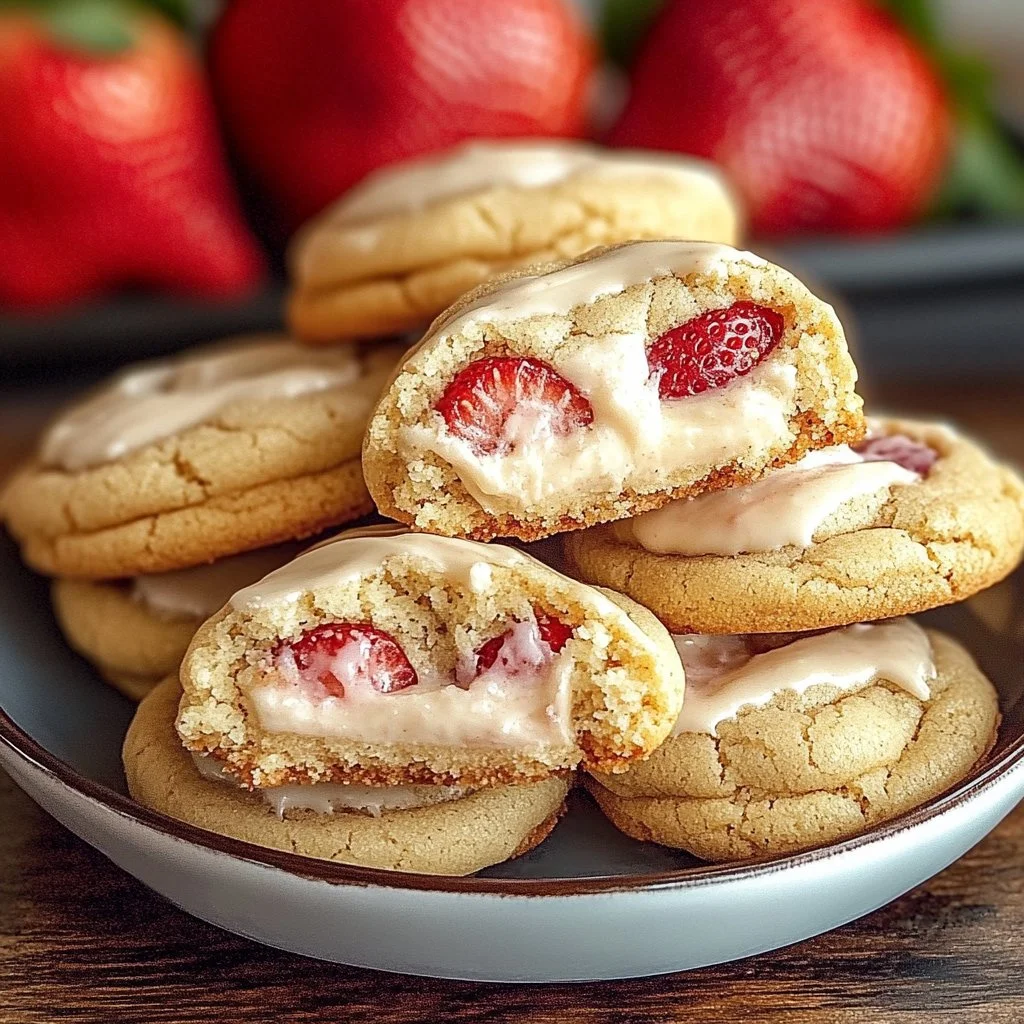
I still make a double batch of these when strawberries are at their peak. They are soft butter cookies with a sweet-tangy cheesecake center and a glossy strawberry compote folded into the dough. They feel special enough for a small celebration, but quick enough for an afternoon tea. If you like a different texture, you can compare textures with my take on strawberry crunch cookies to decide which suits your craving.
Why you’ll love this dish
This recipe balances three textures in every bite: a tender cookie, a creamy frozen cheesecake core, and a jammy strawberry ribbon. It is kid friendly, portable for lunchboxes, and impressive at potlucks because the filling looks like a surprise. You only need pantry basics plus fresh strawberries to pull it off.
"Soft, sweet, and a little tangy — these cookies vanished within an hour at my family gathering. The cheesecake center is pure genius."
They are great for weekend baking, small gatherings, or when you want a single-bite dessert with a homemade feel.
Preparing Strawberry Cheesecake Cookies
Step-by-step overview
- Make and freeze small rounds of sweetened cream cheese so the centers stay intact during baking.
- Cook a quick strawberry compote until thick and shiny. Cool completely.
- Whip a simple butter cookie dough, fold in cooled compote, and form around frozen cheesecake balls.
- Bake briefly until the cookie edges are set and the center remains soft and creamy.
This overview helps you plan timing. Freezing the cheesecake centers and cooling the compote are the two timing steps to schedule ahead.
What you’ll need
- 85 g cream cheese
- 15 g sugar (for the cream cheese filling)
- 1/2 tsp vanilla extract (for the filling)
- 50 g fresh strawberries, diced
- 15 g sugar (for the compote)
- 1 tsp lemon juice
- 115 g butter, softened
- 90 g sugar
- 1 egg yolk
- 1 tsp vanilla extract (for the cookie dough)
- 130 g all-purpose flour
- 1/4 tsp baking powder
- Strawberry compote (from above)
Notes on ingredients
- Use full-fat cream cheese for the creamiest centers. Low-fat versions can work but may be slightly looser.
- If fresh strawberries are not available, use thawed frozen berries, drain excess liquid, then reduce compote cooking time.
- Butter should be softened but not greasy. Room temperature for about 30 minutes usually works.
Directions
- Make the cheesecake centers. Beat the cream cheese with 15 g sugar and 1/2 tsp vanilla until smooth. Portion into small spoonfuls or use a mini scoop. Place the portions on a tray and freeze until firm, about 1 to 2 hours.
- Prepare the compote. Put the diced strawberries, 15 g sugar, and 1 tsp lemon juice into a small pot. Cook over medium heat, stirring occasionally, until the mixture reduces and becomes thick and jammy, about 8 to 12 minutes. Remove from heat and let cool completely.
- Heat the oven. Preheat to 175 C (350 F). Line a baking tray with parchment paper.
- Make the cookie dough. Cream the butter and 90 g sugar until light and fluffy. Beat in the egg yolk and 1 tsp vanilla. Add the flour and 1/4 tsp baking powder. Stir until just combined. Fold the cooled strawberry compote into the dough gently so you keep streaks of jam rather than fully blending.
- If the dough is too soft to handle, chill it for 15 to 20 minutes until firm enough to scoop.
- Assemble cookies. Flatten a scoop of dough in your palm. Place a frozen cheesecake ball in the center. Wrap the dough around the ball and pinch to seal completely so no filling peeks out.
- Bake. Place cookies on the prepared tray and bake 11 to 12 minutes, or until the edges have set but the tops are still light. The centers will remain soft.
- Cool briefly on the tray. Let the cookies cool there for a few minutes so they firm up enough to transfer. Serve warm or at room temperature. Dust with powdered sugar or serve with extra compote if you like.
Best ways to enjoy it
Serve these warm so the cheesecake center is soft and slightly melty. They make a lovely dessert with a cup of tea or coffee, and they also travel well in a single layer in a tin. For a contrast in texture, try with a crisp biscuit on the side or a dollop of whipped cream for extra indulgence. If you want a crunchier contrast, check another variation like the strawberry crunch cookies for pairing ideas.
How to store
Room temperature: Store cooled cookies in an airtight container at room temperature for up to 2 days.
Refrigeration: If you prefer chilled cheesecake centers, keep them in the fridge for up to 4 days. Bring to room temperature before serving for the best texture.
Freezing: Freeze baked cookies in a single layer on a tray first. Once firm, transfer to a freezer-safe container with layers separated by parchment. Freeze up to 2 months. Thaw in the fridge overnight or at room temperature for a couple of hours.
Food safety: Because these contain dairy, don’t leave them out longer than 2 hours in warm conditions.
Helpful cooking tips
- Freeze the cheesecake portions solid. If they are not frozen, the centers may leak during baking.
- Cool the compote completely before folding into the dough to prevent melting the butter.
- Use a mini cookie scoop for consistent cookie sizes and even baking.
- If your dough cracks while wrapping, press more gently and warm the dough slightly with your hands for a better seal.
- For perfectly rounded cookies, roll the formed cookie briefly between your palms before placing on the tray.
Creative twists
- Lemon-tinged centers: Add 1 tsp lemon zest to the cheesecake filling for an extra citrus lift.
- Berry swap: Use raspberries or a mixed berry compote instead of strawberries.
- Nutty crunch: Roll the assembled cookies lightly in finely chopped toasted almonds before baking for texture.
- Lower sugar: Reduce the dough sugar by 10 to 20 g and rely on the compote for sweetness if you prefer less sugary cookies.
Common questions
How long does it take to make these from start to finish?
Active hands-on time is about 30 minutes. Allow 1 to 2 hours for the cheesecake centers to freeze. Total elapsed time including cooling and baking is roughly 2 hours.
Can I use whole egg instead of an egg yolk?
Yes, you can substitute one whole egg, but the texture will be slightly more cake-like and less tender. The yolk keeps the cookie rich and tender.
Can I freeze the unbaked filled cookies?
Yes. Freeze the assembled, unbaked cookies on a tray until solid. Transfer to a freezer bag and bake from frozen, adding 2 to 3 extra minutes to the baking time.
Will the cheesecake leak out during baking?
If the cheesecake portions are fully frozen and sealed well inside the dough, leakage is unlikely. Make sure to pinch seams tightly and avoid very thin dough coverage.
Can I make the compote ahead of time?
Absolutely. Compote stores in the fridge for up to 5 days. Chill it thoroughly before folding into the dough to keep the butter from melting.
Are these safe for kids?
Yes, these are kid-friendly. Keep in mind the cookie contains dairy, so follow storage guidance and avoid leaving them out in warm weather for long periods.

Strawberry Cheesecake Cookies
Ingredients
Method
- Beat the cream cheese with 15 g sugar and 1/2 tsp vanilla until smooth.
- Portion into small spoonfuls or use a mini scoop.
- Place the portions on a tray and freeze until firm, about 1 to 2 hours.
- Put the diced strawberries, 15 g sugar, and 1 tsp lemon juice into a small pot.
- Cook over medium heat, stirring occasionally, until thick and jammy, about 8 to 12 minutes.
- Remove from heat and let cool completely.
- Preheat the oven to 175 C (350 F) and line a baking tray with parchment paper.
- Cream the butter and 90 g sugar until light and fluffy.
- Beat in the egg yolk and 1 tsp vanilla.
- Add the flour and 1/4 tsp baking powder, stirring until just combined.
- Fold in the cooled strawberry compote gently to keep streaks of jam.
- If the dough is too soft, chill for 15 to 20 minutes.
- Flatten a scoop of dough in your palm and place a frozen cheesecake ball in the center.
- Wrap the dough around the ball and pinch to seal completely.
- Place cookies on the prepared tray and bake for 11 to 12 minutes.
- Let the cookies cool briefly on the tray before transferring.